Intermediate Course
For those who want to perfect their riding style or want to learn how to freestyle.
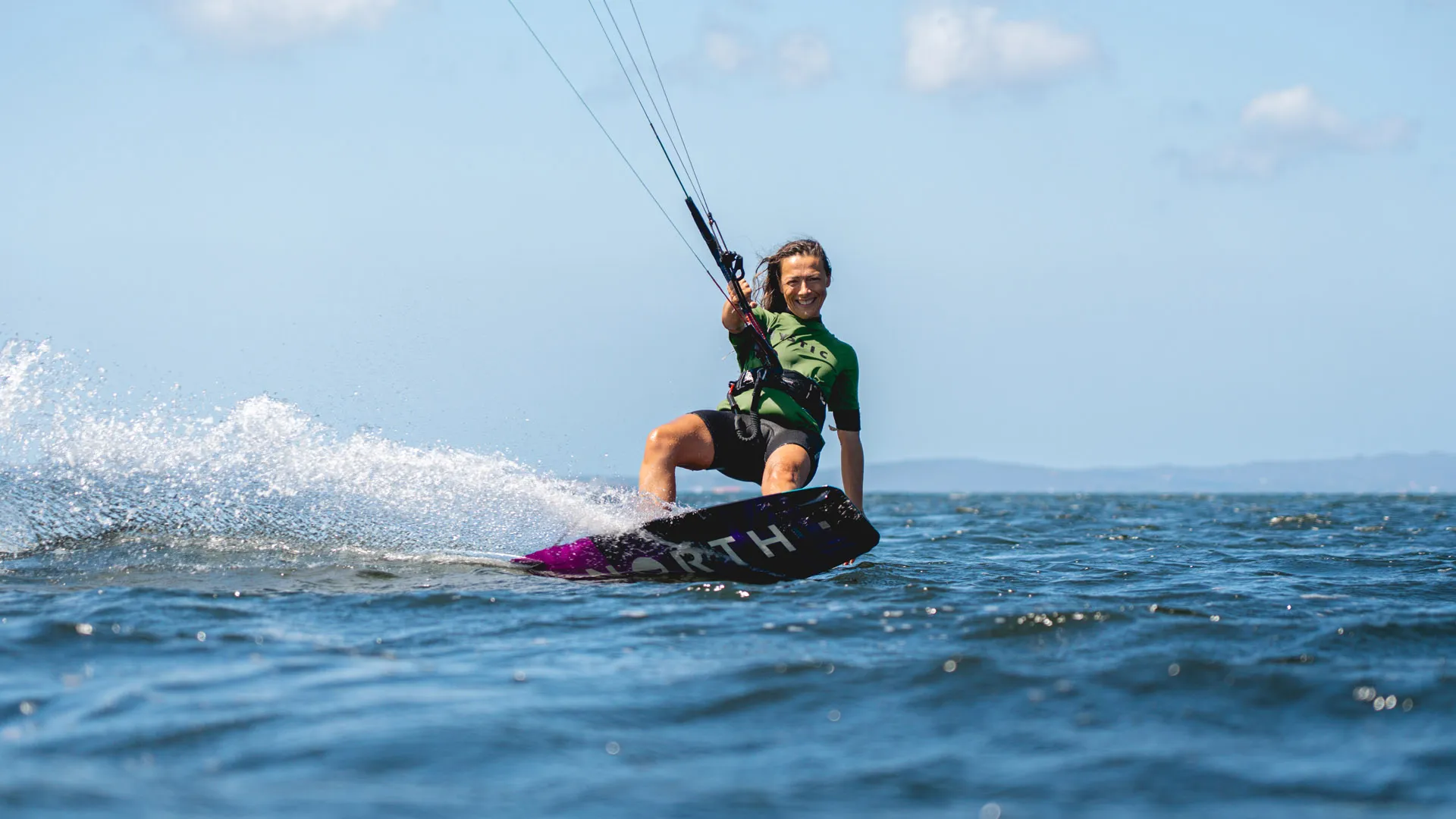
For those who want to perfect their riding style or want to learn how to freestyle.
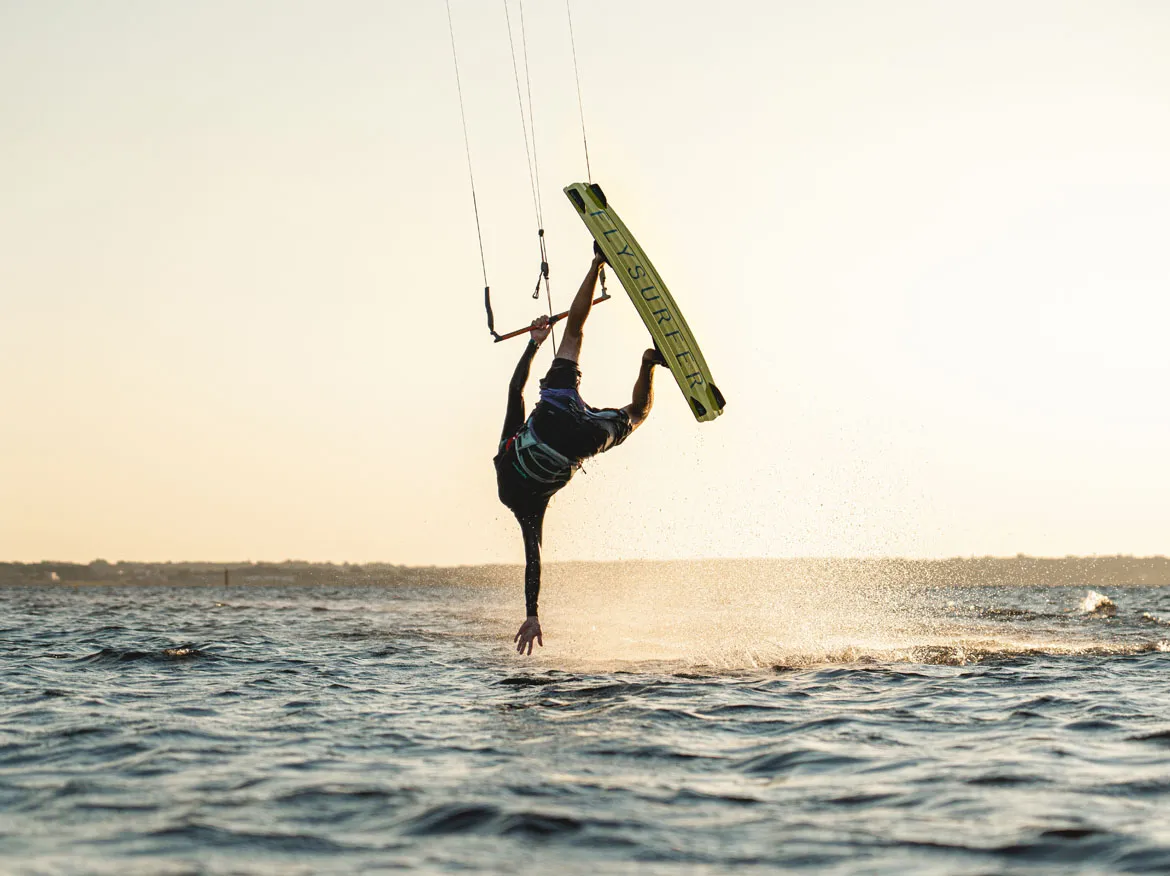
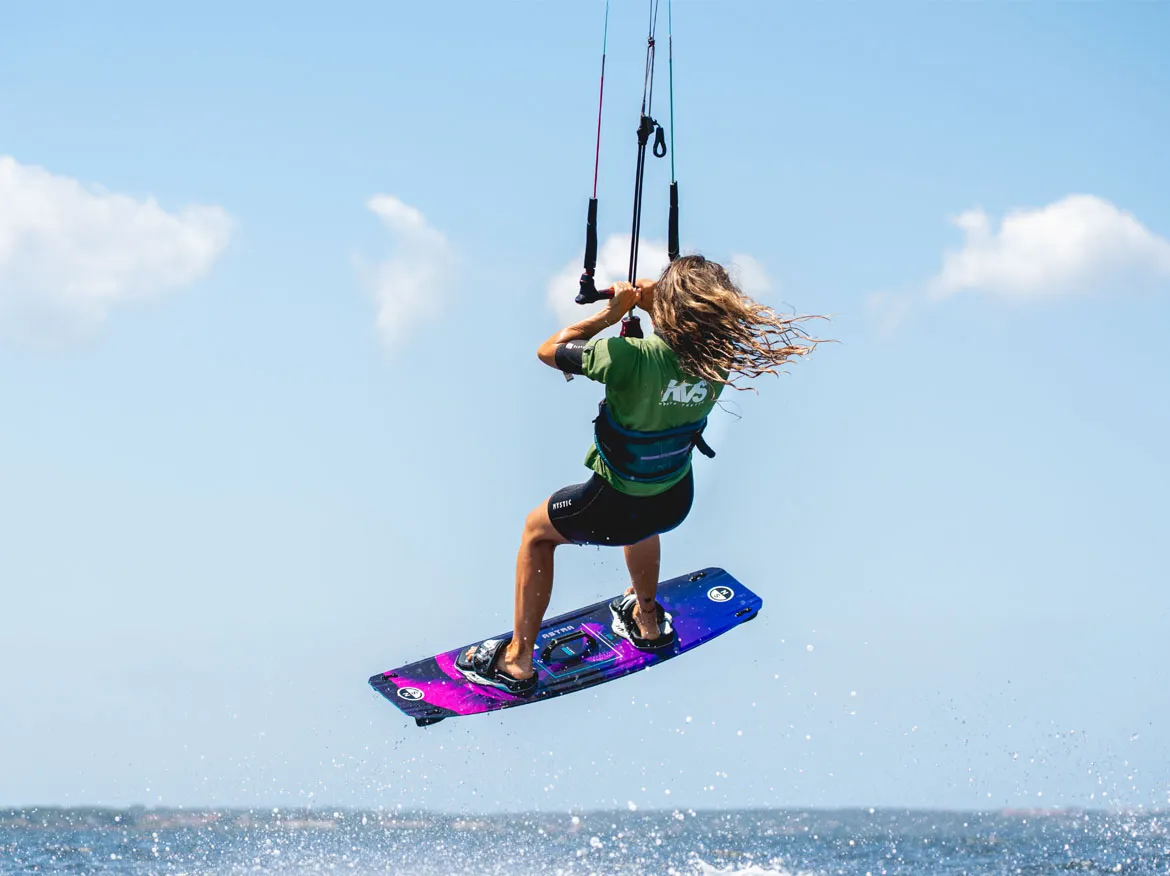
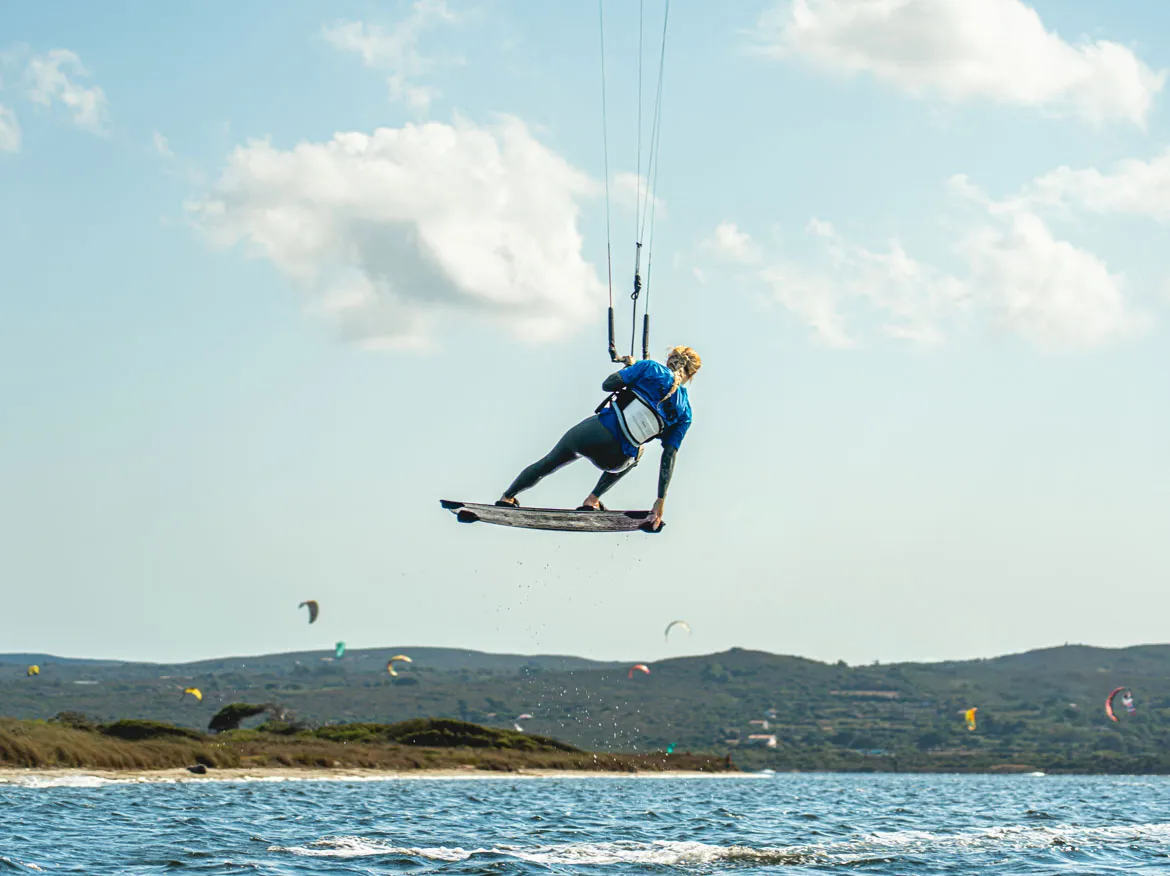
These lessons allow students to advance as quickly as possible, taking the right steps forward and in total safety, avoiding the risks of self-learning.
Depending on your level, the instructor may choose to follow you around by boat or by riding together with you, always communicating instructions in real-time by means of the supplied radio helmet. Upon request you may choose to take some video footage in order to watch and analyze your performance at a later time with your instructor.

Sardinia’s reliable winds let you practice new tricks without unpredictable gusts.

Punta Trettu’s calm, flat waters minimize fall risks and help you focus on perfecting your skills.

Our Kite Village Sardinia team knows these winds and waters deeply. Plus, you’ll meet passionate kiters eager to improve alongside you.

Our certified instructors bring years of experience to help intermediate riders push their limits.
We regularly update and inspect our gear for smooth sessions with fewer hiccups.
Join a friendly group of kiters who support each other, offering chances to learn from peers and share tips post-session.

Riding stances: you can ride at different angles with regards to the wind, from upwind (against the wind) to sidewind (same direction as the wind): this way you will be truly free to head in any direction at any time.
Improve your upwind riding: riding close to the wind is essential in all sailing sports and knowing how to do it well even in light-wind conditions makes us safe riders.
Jump technique: a good jump encompasses a wide range of skills from being able to take off in perfect balance to softly landing while at the same time keeping your speed under control.
Rotations: when you are airborne during a jump you can initiate a 360 degrees rotation backwards (back-roll) or forwards (front-roll).
Toeside stance: drive off the back foot, banking the board over onto the toe side rail and commit your body weight upwind of the board. Ride by applying weight on your back leg and letting your toes push on the upwind rail of the board to cut through the water.
Jibe: (directional board) change direction by performing a semicircular downwind turn keeping the board gliding on its edge.
Downloop: make a half loop for a little extra power in light wind or to add variety to your transitions.

You will be guided step by step by an instructor.


In case you want to learn with a buddy, a partner, a spouse or simply a friend, you have the option to take the beginner course as two students and one instructor.
This arrangement will give you a chance to save some money on the total price of the lesson. Students will take turns practicing, will get a chance to watch each other in action and will be able to learn from the other person's mistakes.
N.B. In order for this type of course to be effective and practically possible, students must have a weight difference no greater than 10 kg.
N.B. Prices are per person.
Taking kite boat lessons gives you a chance to learn far away from other riders, therefore having more space available for yourself.
The instructor will communicate instructions to you using the supplied radio helmet.
This type of lesson is held in an area immediately surrounding the spot of Punta Trettu. Students are taken to this area and returned to shore by boat.
N.B. Possibility to practice downwind for groups of at least 3 people.
N.B. The price includes boat rental.
Kitesurfing is a wind-powered water sport. This extreme sport harnesses the wind with an inflatable wing, called a kite, controlled by a bar connected to four 22-24 meter long lines. The kite pulls you upright on a board similar to a wakeboard. It's relatively easy to learn and suitable for all ages, which is why it has become so popular in recent years.
Aerodynamically, the kite is essentially a small airplane wing. The difference in pressure between the upper and lower parts, called "lift", keeps it in the air. While riding, you can decide the angle and position of the kite, thus controlling your speed through the water.
Being an extreme sport, kitesurfing involves risks. However, by learning to control the kite during the course, respecting the navigation rules, and always maintaining the right distance from obstacles, it can become a truly extraordinary experience. Always remember to check local weather conditions before choosing the right equipment.
You can learn and practice kitesurfing at any spot with a sandy beach and sufficient onshore wind (i.e., blowing toward the shore). However, some locations are more suitable, with more favourable water and weather conditions than average, and with kitesurfing schools already operating.
A shallow lagoon with steady winds is the ideal place to learn. In Southern Italy, Lo Stagnone in Sicily and Porto Botte and Punta Trettu in Sardinia offer very similar and optimal conditions, which is perfect for beginner kitesurfers.
The price of kitesurfing equipment varies depending on whether it's new or used. Kites range in price from about €400 to €2,500. The control bar ranges from €250 to €700, the harness to connect the kite to ranges from €60 to €300, and a board ranges from €200 to around €700.
Most kitesurfing schools in Italy require membership in their sports club, which includes kitesurfing insurance. However, you can always check with your local insurance company. Be sure to ask about kitesurfing-specific options, as they are not always included in extreme sports insurance.
Generally, children can start kitesurfing at age 10. Some children start a few years earlier, depending on their concentration and motor control. In any case, the minimum weight required for safe kitesurfing is 30 kg.